The Wait! What? Cognitive Theory of Mind Series™
The 4-Stage Cognitive Theory of Mind Assessment & Intervention Suite (Ages 4–6)
Bridging the gap between sterile diagnostic research and premature SEL instruction. A comprehensive, non-animated digital intervention system mapping progressive cognitive perspective-taking for pediatric SLPs, school psychologists, and neurodiverse clinical settings.


The Core Milestone: Separating self-preference from another’s desire.
Interactive Focus: Suppressing egocentric bias through playful choice points.
Book 1: Diverse Desires
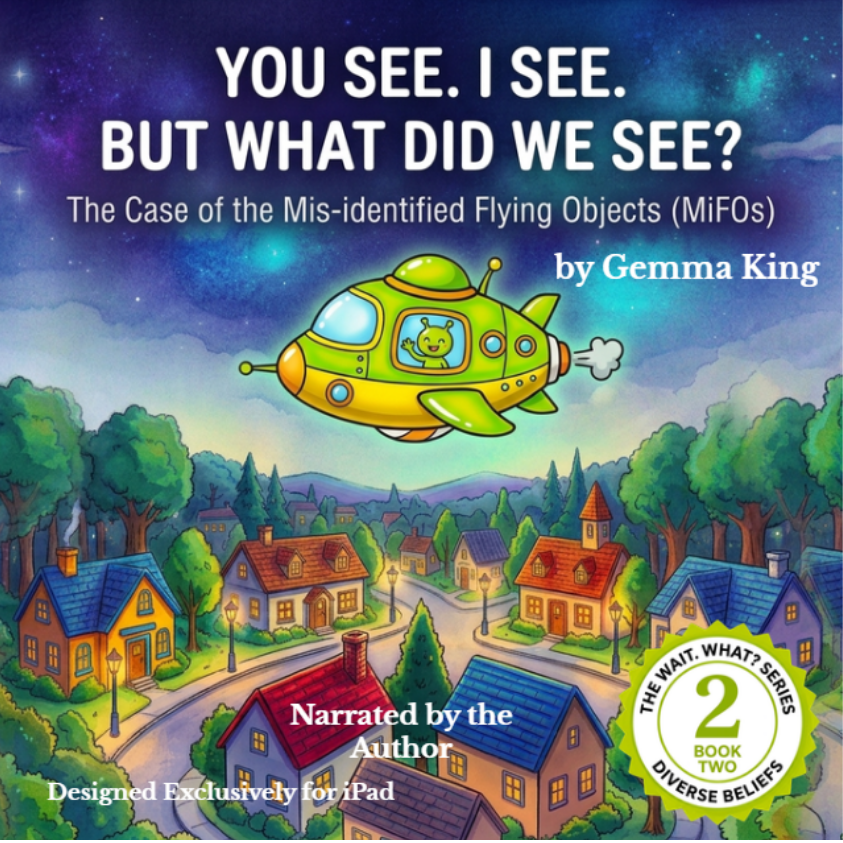
Book 2: Diverse Beliefs
The Core Milestone: Doing + Thinking = Mental Perspective.
Interactive Focus: Using the "Brain Picture" metaphor to visualize invisible thoughts.
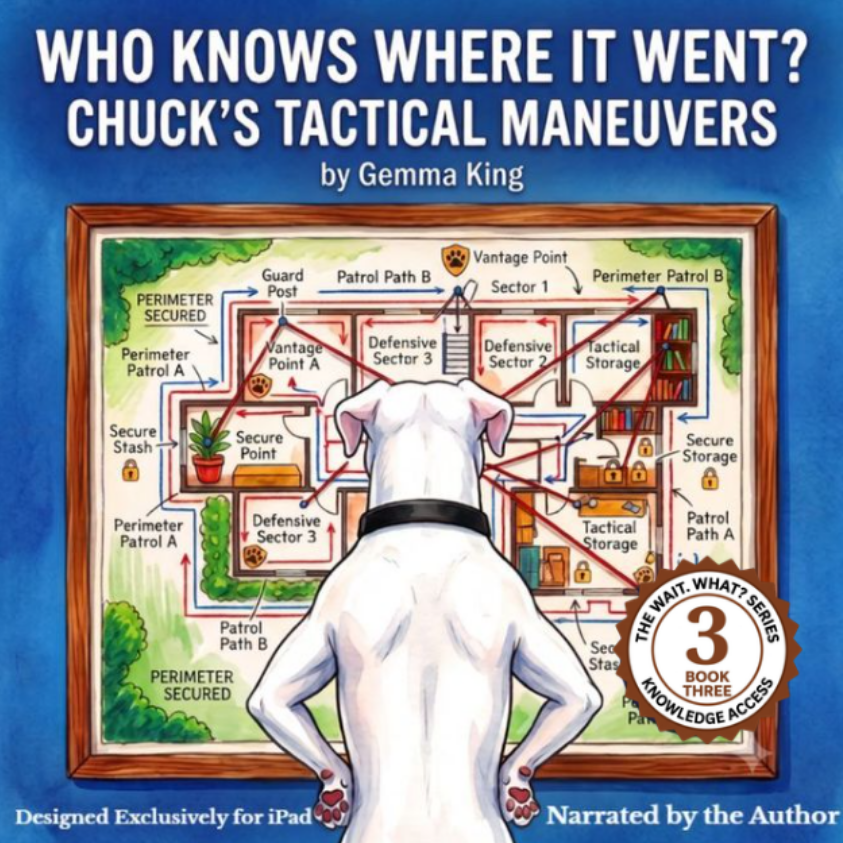
Book 3: Knowledge Access
The Core Milestone: Information boundaries and observation.
Interactive Focus: Tracking who saw what to understand knowledge gaps.

Book 4: Explicit False Beliefs
The Core Milestone: Overcoming Realism Bias (The Capstone Task).
Interactive Focus: Predicting actions driven by outdated mental expectations.

Series Cast
Engineered for Diverse Representation
Every narrative features recurring, diverse child characters designed to elicit naturalistic social interaction and reduce cultural testing bias without sensory-overstimulating animations.

Perspective Generalization: Evaluates whether the child can independently predict, explain, and generalize that internal state across novel characters and unfamiliar environmental contexts.
Standardized 3-Level Prompting Hierarchy: Standardized clinical prompting protocols (Levels 1, 2, and 3) that dictate precisely when and how to scaffold support, preserving diagnostic validity while ensuring consistent, reproducible administration across different clinicians and therapy sessions.
Longitudinal Progress Tracking: Efficient, session-by-session tracking sheets designed to record prompting levels, independent responses, and developmental milestones over time without disrupting direct clinician-child rapport.
Research-Grounded Mechanics: Built on proven developmental continuum frameworks (Wellman & Liu, 2004) and modernized for early intervention.
Designed for seamless clinical workflow, this companion guides provide the standardized architecture needed to translate interactive iPad sessions into defensible, audit-ready developmental data.
Rather than functioning as a passive scoring sheet, the protocol serves as an active clinical instrument—systematically guiding the practitioner through baseline diagnostic observation, structured cognitive escalation, and longitudinal progress tracking grounded in the Wellman & Liu milestone hierarchy.
Standardized Diagnostic Administration & Scoring: Step-by-step observational rubrics systematically differentiate between baseline performance, emerging understanding, and independent milestone mastery across every volume—establishing objective, criterion-referenced data for internal cognitive shifts and perspective-taking.
Turnkey IEP & MTSS Alignment (Goals (Goals & Measurable Objectives): Pre-constructed, defensible IEP goal banks paired with granular, measurable behavioral objectives aligned with IDEA Part B and Medicaid documentation requirements—providing precise criterion language (accuracy percentages, prompting levels, and generalization criteria) rather than ambiguous, top-level targets.
Structured Pedagogical Escalation Architecture:
Elicitation & Personal Investment: Engages the learner directly in evaluating the initial premise, establishing their personal expectation or baseline internal state.
Cognitive Pivot & Rule Discovery: Guides the learner through concrete narrative contradictions, allowing them to systematically recognize that another person's internal mental state differs from their own.
Comprehensive Clinician Implementation Protocol
The Heart Behind Our Theory of Mind Series
Letter from the Publisher
As the founder and publisher of Pixel and Parchment Books, I wanted to do a series about bullying. But where do you start with such a serious, emotionally charged issue? My passion for addressing bullying isn’t just professional; it is deeply personal.
I know the profound, lasting damage bullying does to a child because I lived it. I am the survivor of daily, prolonged abuse at the hands of an older sibling that lasted for well over a decade. While my experience was extreme, any encounter with bullying is devastating—not just for the child in the crosshairs, but for those who bear witness to it, living in terror of becoming the next target.
I am just getting started on the subject of bullying. But to truly stop it, we have to look directly at its developmental root cause.
Research informs us that a lack of empathy, perspective-taking, and cognitive flexibility directly cripples a child’s ability to navigate society successfully. When children lack these tools, they become frustrated, isolated, and misunderstood. For some, a dangerous shift happens: they discover that bullying provides a powerful, dysfunctional rush of endorphins that makes them feel good. By the age of seven, if these behavioral pathways aren't corrected, the brain begins to rewire itself like Pavlov’s dog—conditioning a child to choose aggression because it literally feels good.
It is never too soon to intervene. If we want children to make positive, conscious cognitive choices rather than destructive reactive ones, we must give them the foundational skills they need before social complexities overwhelm them. This is where our new series begins.
Kathy P.
Founder, Publisher & Chief Systems Architect Pixel and Parchment Books