The Wait! What? Cognitive Theory of Mind Series™
Wait! Where Else Could It Be?
Book 4: Explicit False Beliefs
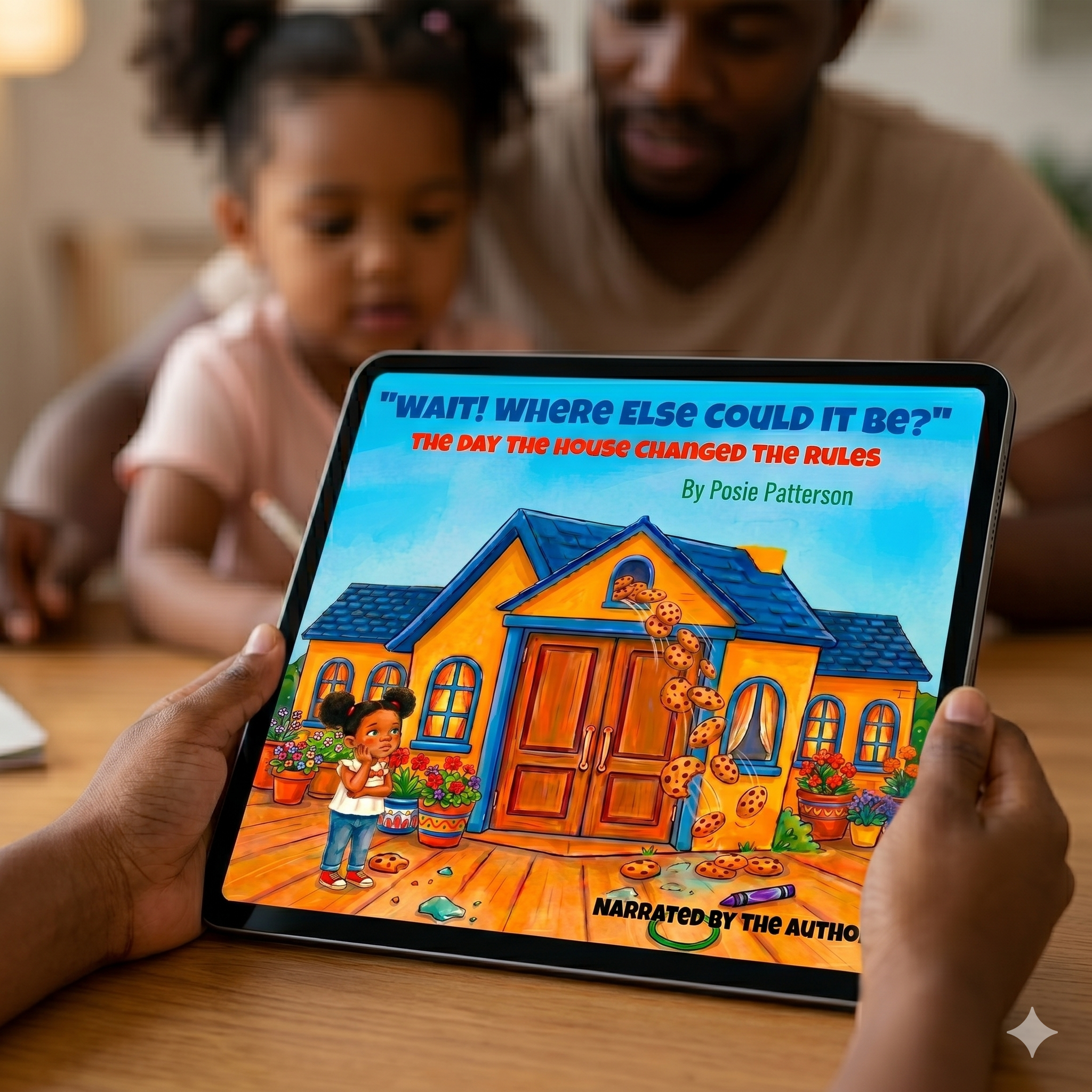
Is Vivie’s house playing tricks, or is it all just her imagination? Vivie wants to draw a colorful picture of spaceships and monsters—but her crayons are missing! In this interactive tap-and-play adventure, everyday containers are mixed up in the silliest ways. Crayons hide in the sticker box, yummy cookies are in the dog treat jar, and toys rest in the trash bin! Ages 4-6
A Cognitive Theory of Mind (ToM) & Social-Emotional Learning (SEL) Selection
Explicit false belief—the ability to recognize that someone else can hold a belief about the world that differs from reality—is one of the most critical and challenging developmental milestones in Theory of Mind.
Wait! Where Else Could It Be? translates the classic Smarties/Unexpected Contents Paradigm (Perner, Leekam, & Wimmer, 1987) into a rich, immersive story experience. Research demonstrates that young learners and neurodivergent children process perspective-taking, inference, and social cognition significantly better when embedded in an engaging narrative rather than presented as a dry, isolated assessment task.

Why Practitioners & Educators Love
“Wait, What Else Could It Be?”
Evaluative Tool & Intervention in One: Functions seamlessly as both a baseline evaluation and an interactive teaching tool. It is a completely turnkey, ready-to-go resource—no external props, testing kits, or prep required.
Directly Targets Explicit False Beliefs: Helps children systematically bridge the gap between appearance and reality, building essential perspective-taking and mentalizing skills.
Strengthens Foundational Prerequisites: Builds critical executive function skills alongside perspective building, including cognitive flexibility, working memory, and inhibitory control.
Turnkey Clinician Implementation Protocol Guide Included: Seamlessly aligns CASEL standards with measurable IEP goals. Features clear implementation strategies and guided conversation prompts tied directly to your students' individual learning plans.