The Wait! What? Cognitive Theory of Mind Series™
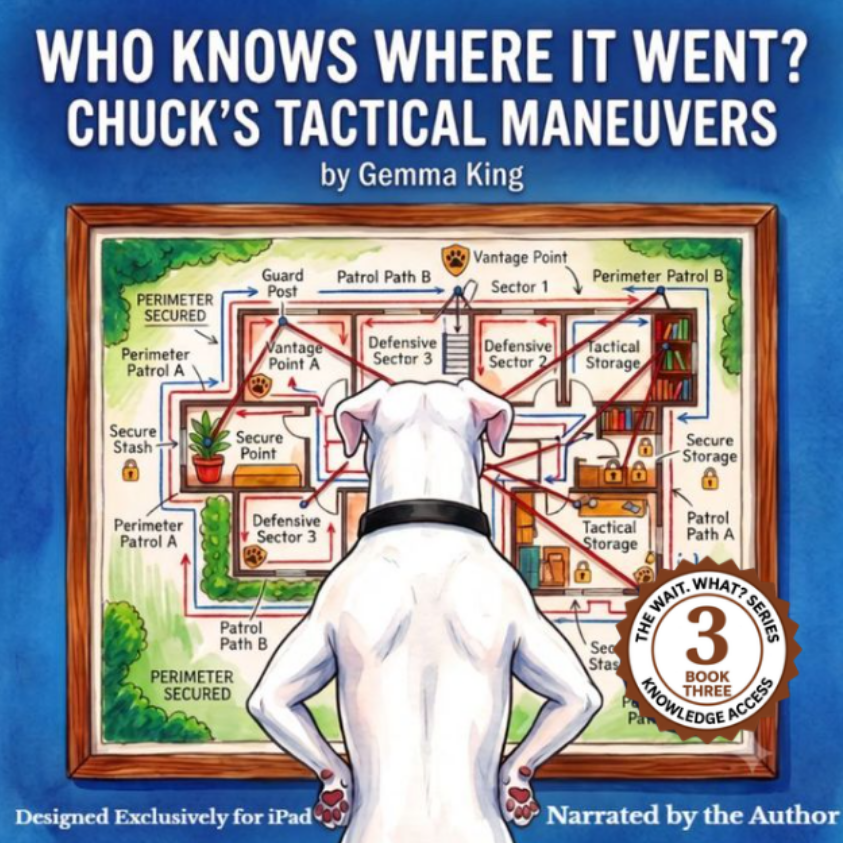
Who Knows Where It Went?
Book 3: Knowledge Access
A Theory of Mind (ToM) & Social-Emotional Learning (SEL) Selection / Ages 4-6 USD
Just because you know something doesn’t mean everyone else does!
Chuck is a master of tactical operations—or so he thinks. This story explores Theory of Mind Knowledge Access, showing how people (plus one cat and a dog!) know only what they have actually seen or experienced.
The accompanying Instructional Guide offers engaging discussion prompts that help the child reach the broader realization that:
You can't expect others to understand a situation without giving them the clues first.
Tracking who saw what prevents everyday confusion, frustration, and playground standoffs.
Beyond "If I Know It, You Know It"
Knowledge Access (Level 2 Visual Perspective Taking) is a foundational milestone in developmental psychology and Theory of Mind (ToM). It marks the developmental shift in which a child learns that seeing is knowing—and that another person cannot know information they haven't personally seen, heard, or experienced.
Before acquiring Knowledge Access, young children operate under Egocentric Realism (often called the Curse of Knowledge), assuming everyone shares their privileged, omniscient view of the world. If the child sees where a hidden object is placed, they instinctively assume every character in the story knows it too.
The Sally-Anne Test (Baron-Cohen, Leslie, & Frith, 1985; Wimmer & Perner, 1983) provides the book’s framework.
Why Clinicians and Educators Love It:
Targets Essential Theory of Mind Milestones: Directly operationalizes Level 2 visual perspective-taking, guiding learners to recognize that a character's knowledge is defined solely by what they have directly observed.
Tackles the "Curse of Knowledge": Actively challenges egocentric bias, training students to inhibit their own privileged, omniscient view of a scene when predicting what a character knows or will do next.
Turns Classic Research into Interactive Practice: Translates proven developmental paradigms—like the foundational Sally-Anne false-belief test—into engaging, story-driven investigative challenges.
Built-in Baseline & Progress Monitoring: Provides clear, sequential choice points throughout the narrative that allow practitioners to easily evaluate whether a student is guessing, projecting, or accurately tracking informational access.
Why Clinicians and Educators Love It:
Reinforces Executive Function & Inhibitory Control: Requires students to pause, evaluate physical sight lines and environmental barriers, and hold multiple competing perspectives in mind before answering.
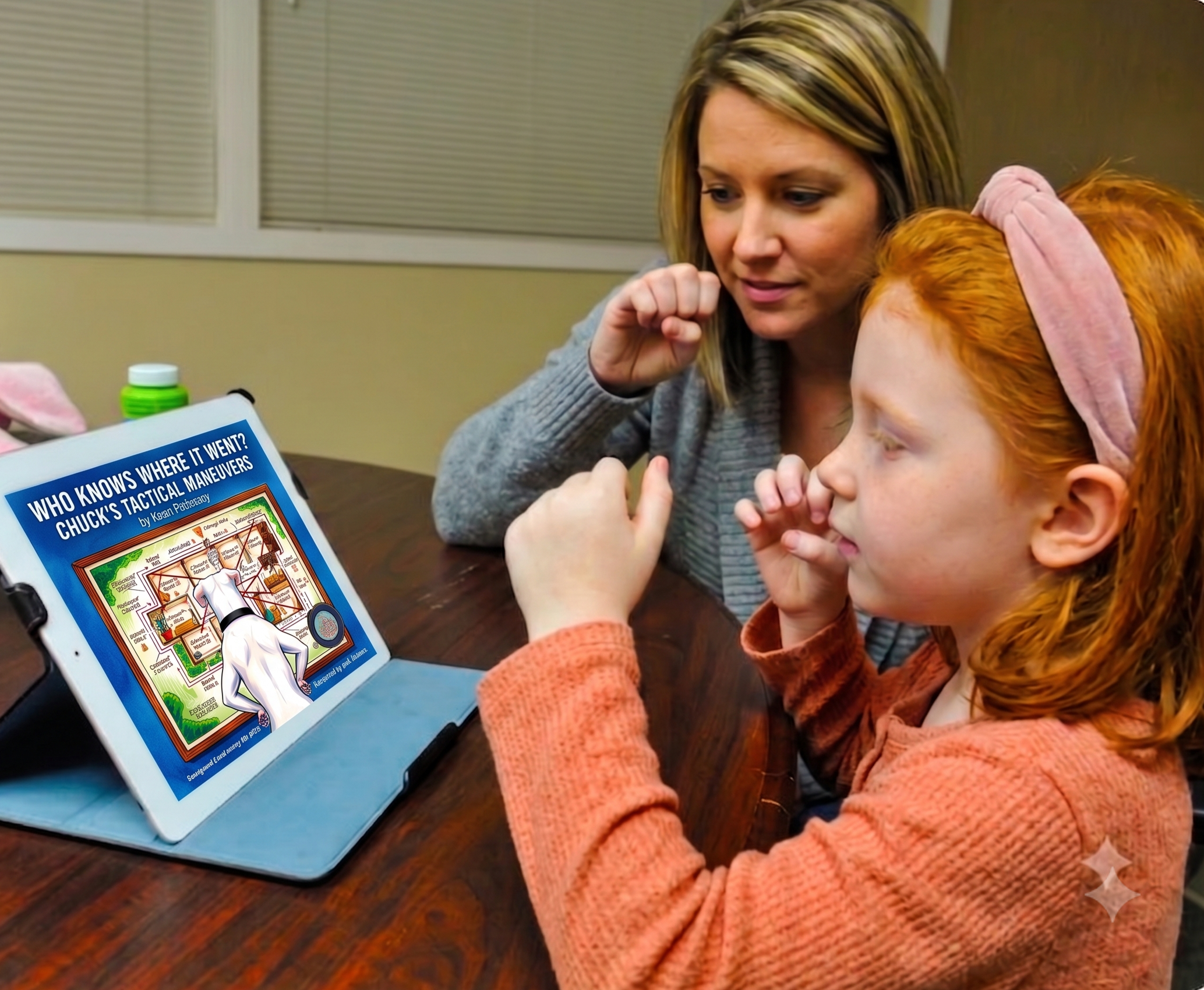
Provides Turnkey Clinical Language: Equips educators and therapists with targeted prompts (e.g., "Did Chuck see it go in there?") to guide real-time cognitive shifts during sessions without breaking narrative engagement.
Seamless IEP Goal Alignment: Structured to support measurable social-cognitive benchmarks, data collection, and targeted intervention strategies across clinical, school, and home learning environments.