Wait! What? Series
You Like What I Like. Right?
Book 1: Diverse Desires
Every story is only half the solution. Pair the book with our Diverse Desires Companion Guide (below) for a complete, ready-to-use therapy session with zero prep required.
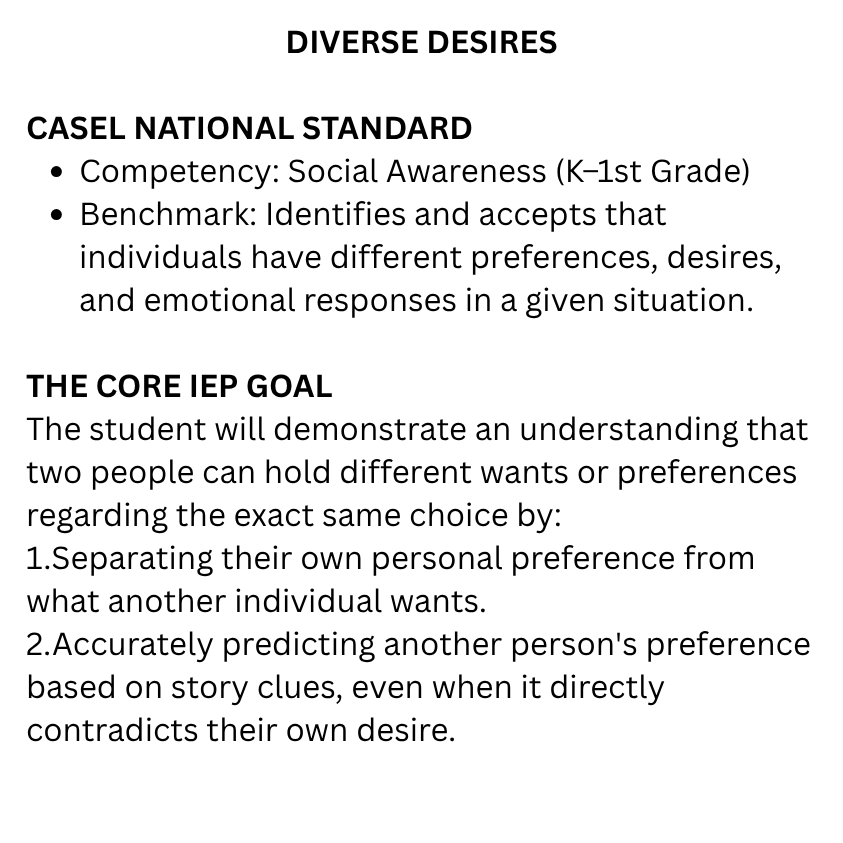
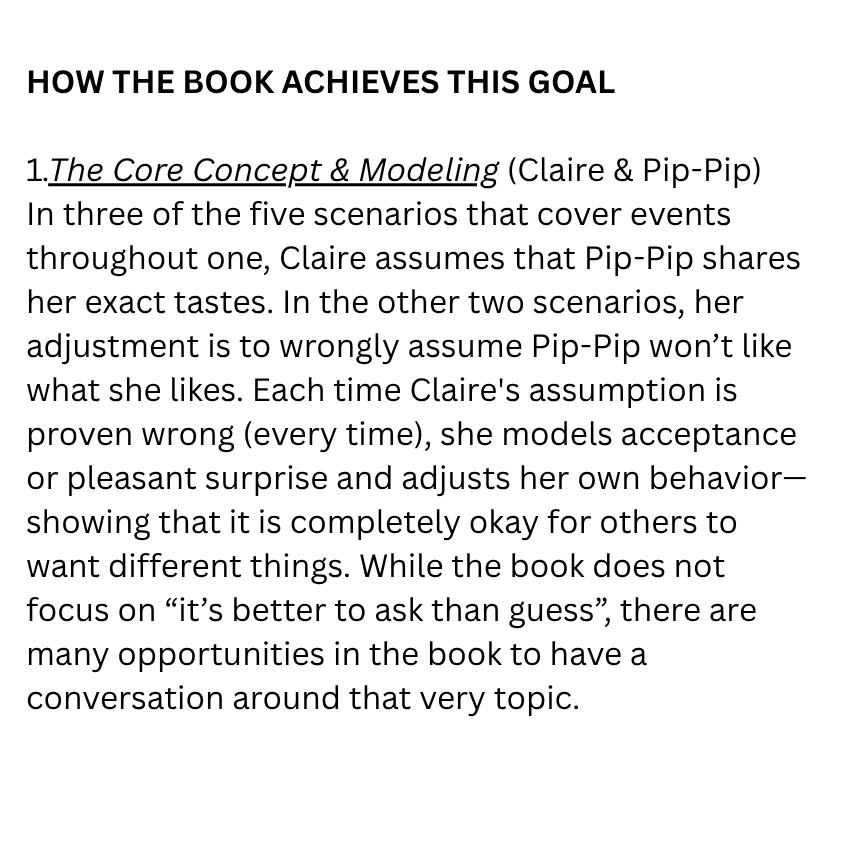
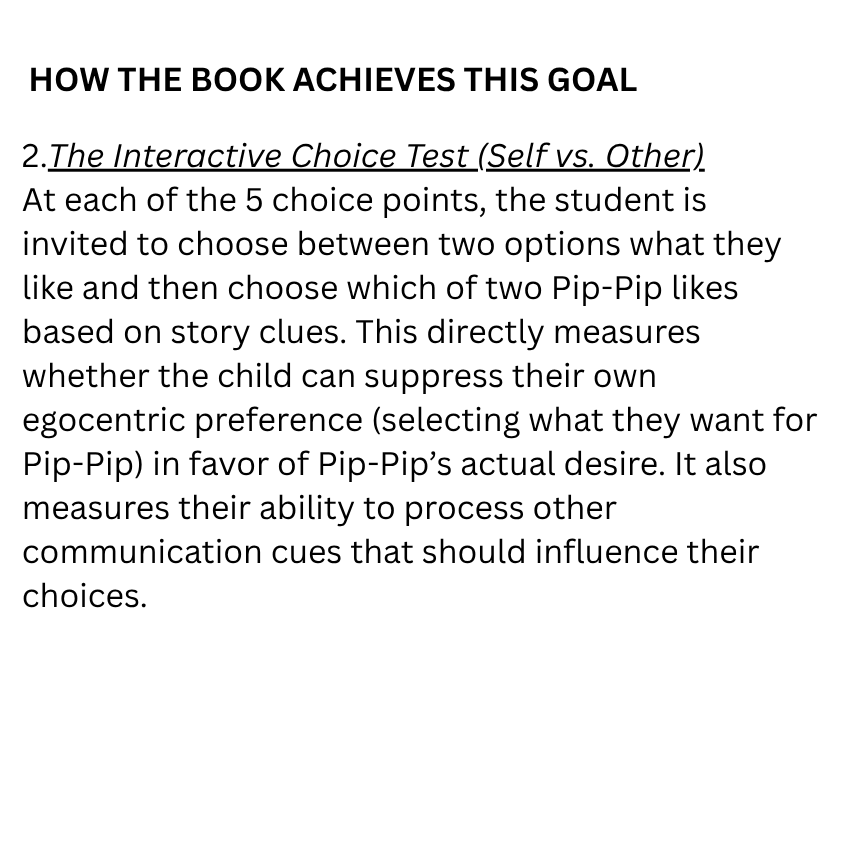
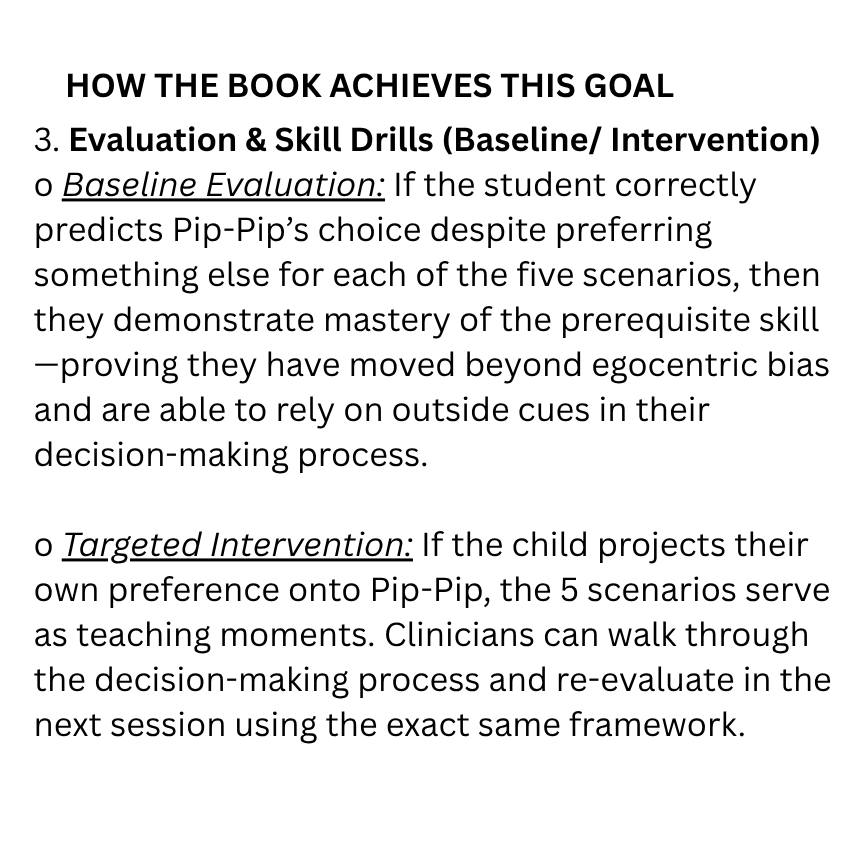
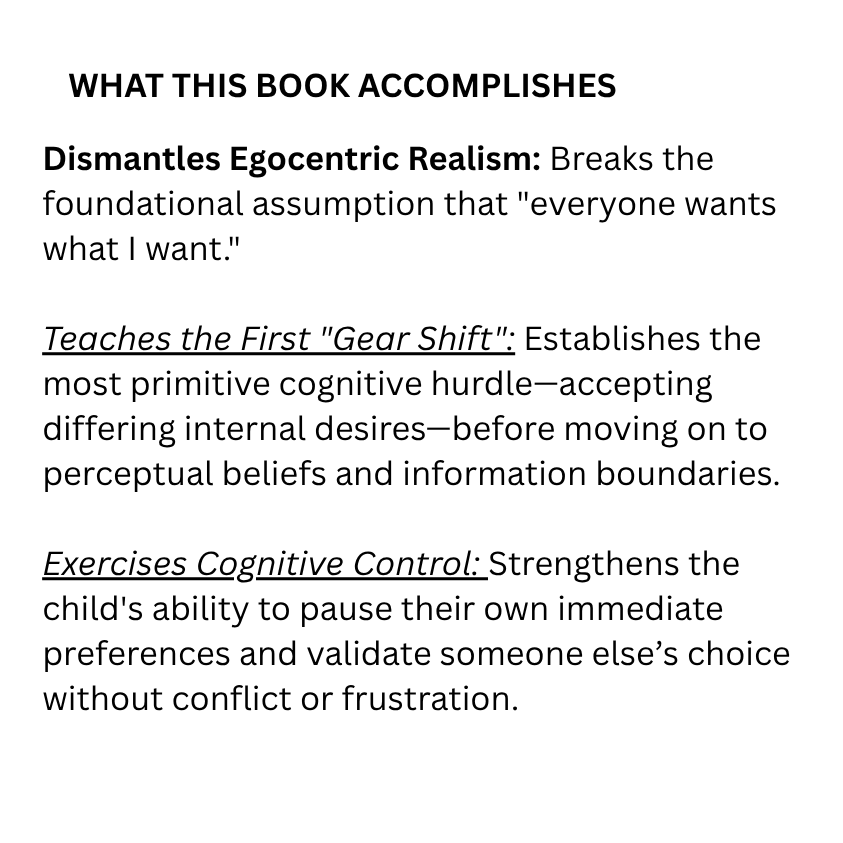
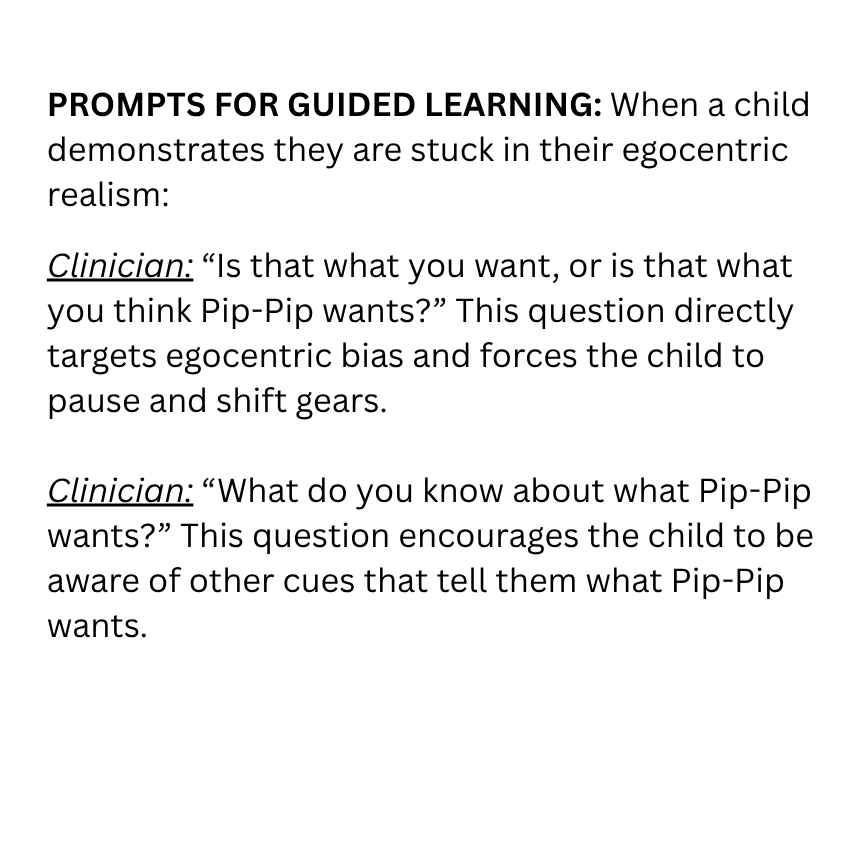
Diverse Desires - Understanding that different people can have distinct wants, preferences, and motivations—even when those desires directly conflict with one's own—serves as a foundational stepping stone in early social-emotional development and Theory of Mind (ToM).
This story translates the classic Diverse Desires paradigm established in Wellman and Liu's landmark scale (2004) into a rich, immersive narrative experience.
Framing distinct preferences through interactive story scenarios allows children to naturally internalize that another person's desire is valid and real, laying the vital groundwork for empathy, flexible thinking, and respectful social interactions in everyday life.
Download for Free
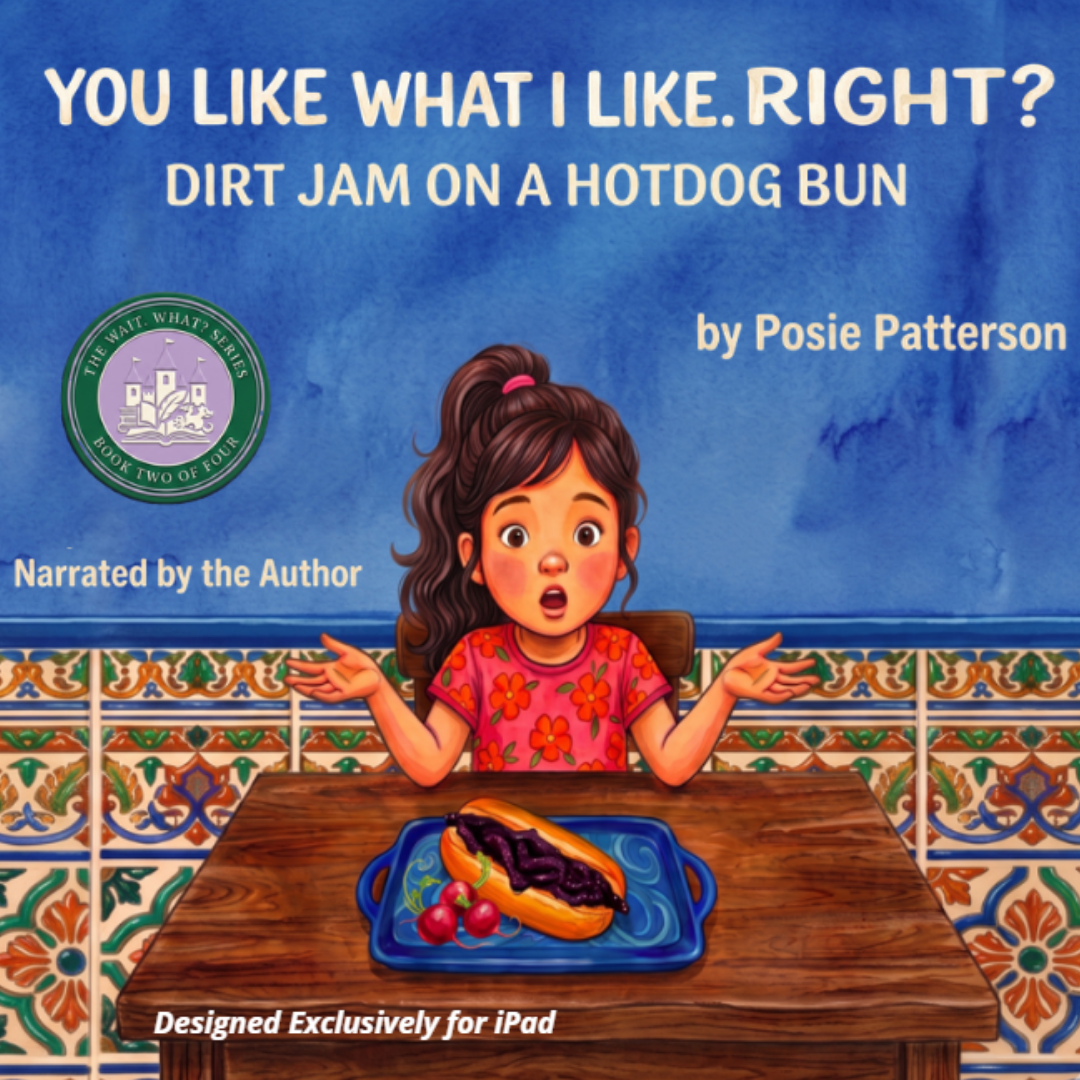
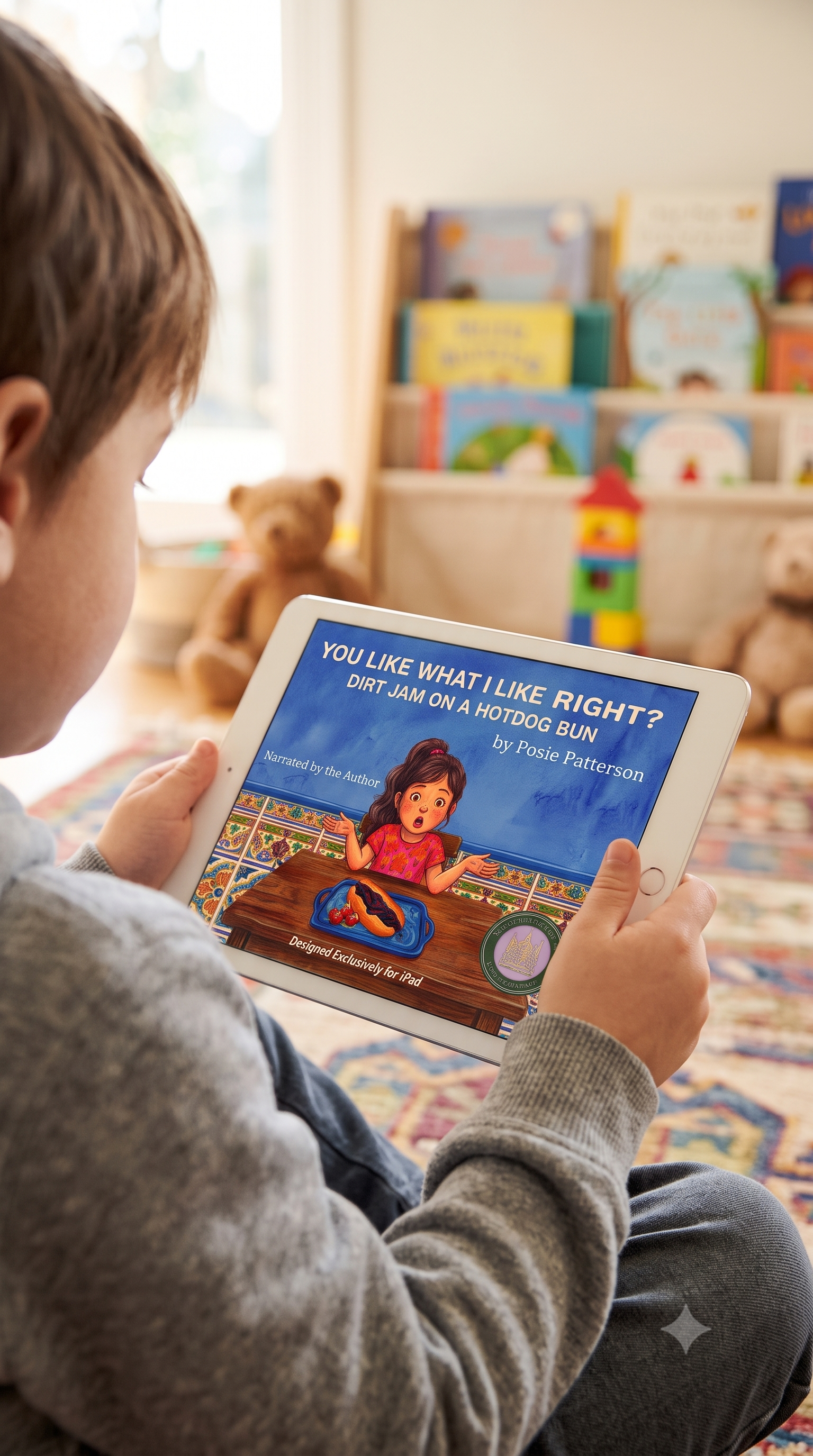
Claire knows exactly what makes a perfect lunch. A delicious peanut butter and jelly sandwich, of course! So when she meets her new friend Pip-Pip, she just knows he’ll love them too. But Pip-Pip is a little monster with some very... interesting tastes. Dirt Jam on a hot dog bun, anyone? In this silly, interactive guessing-game book, young readers are invited to tap, choose, and predict what happens next. But watch out! You might just find out that what’s "yummy" to you is totally "yuck" to someone else—and that’s exactly what makes friendship so much fun! Ages 4-5/$14.99 USD
A Theory of Mind (ToM) & Social-Emotional Learning (SEL) Selection

Why Practitioners and Educators Love It…
Bridges the "Diverse Desires" Gap: Translates the fundamental Theory of Mind concept—that two people can have completely different wants and preferences—into a relatable, concrete narrative children easily understand.
Reduces Egocentric Bias: Encourages young readers to step outside their own immediate likes and dislikes, building essential perspective-taking skills without making them feel judged or tested.
Fosters Inclusive Social Interactions: Teaches children how to navigate peer preferences, sharing, and compromise by recognizing that a friend's different choice is just as valid as their own.
Neurodivergent-Friendly Narrative: Replaces abstract, dry clinical prompts with warm, story-based decision points that help autistic and neurodivergent learners process social inference in context.