Diverse Beliefs represents a crucial developmental milestone in Cognitive Theory of Mind (ToM) where a child realizes that two people can look at the exact same situation and hold completely different, non-conflicting beliefs about it based on their unique knowledge or perspective. Unlike false beliefs—where one person is objectively mistaken about reality—diverse beliefs simply acknowledge that mental representations of the world naturally vary from person to person. Understanding this concept allows young learners to move past the assumption that everyone thinks, knows, and interprets the world in the exact same way they do.
Mastering this step is essential because it forms the cognitive bridge needed to tackle more complex social inferences, such as understanding hidden information, recognizing mistaken assumptions, and navigating nuanced social communication in group settings.
Download for Free
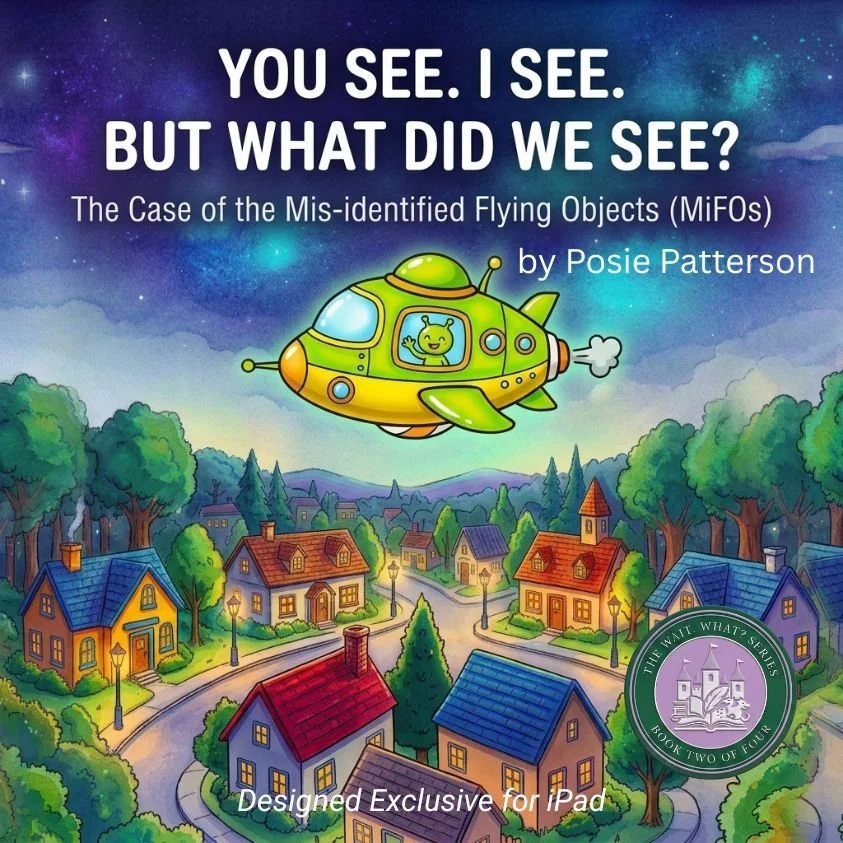
You See. I See. But What Did We See? In the town of Wavering Woods, active imaginations lead to wild rumors when mysterious objects are spotted in the sky. Detective Peril and his young assistant are on the case, investigating reports from around town. As witnesses report everything from space monsters to alien ships, the detective must gather clues and navigate conflicting perspectives to discover the surprising truth behind the floating phenomenon.
A Cognitive Theory of Mind & SEL Selection
Core SEL Focus: Social Awareness • Perspective-Taking • Diverse Beliefs $16.99 USD

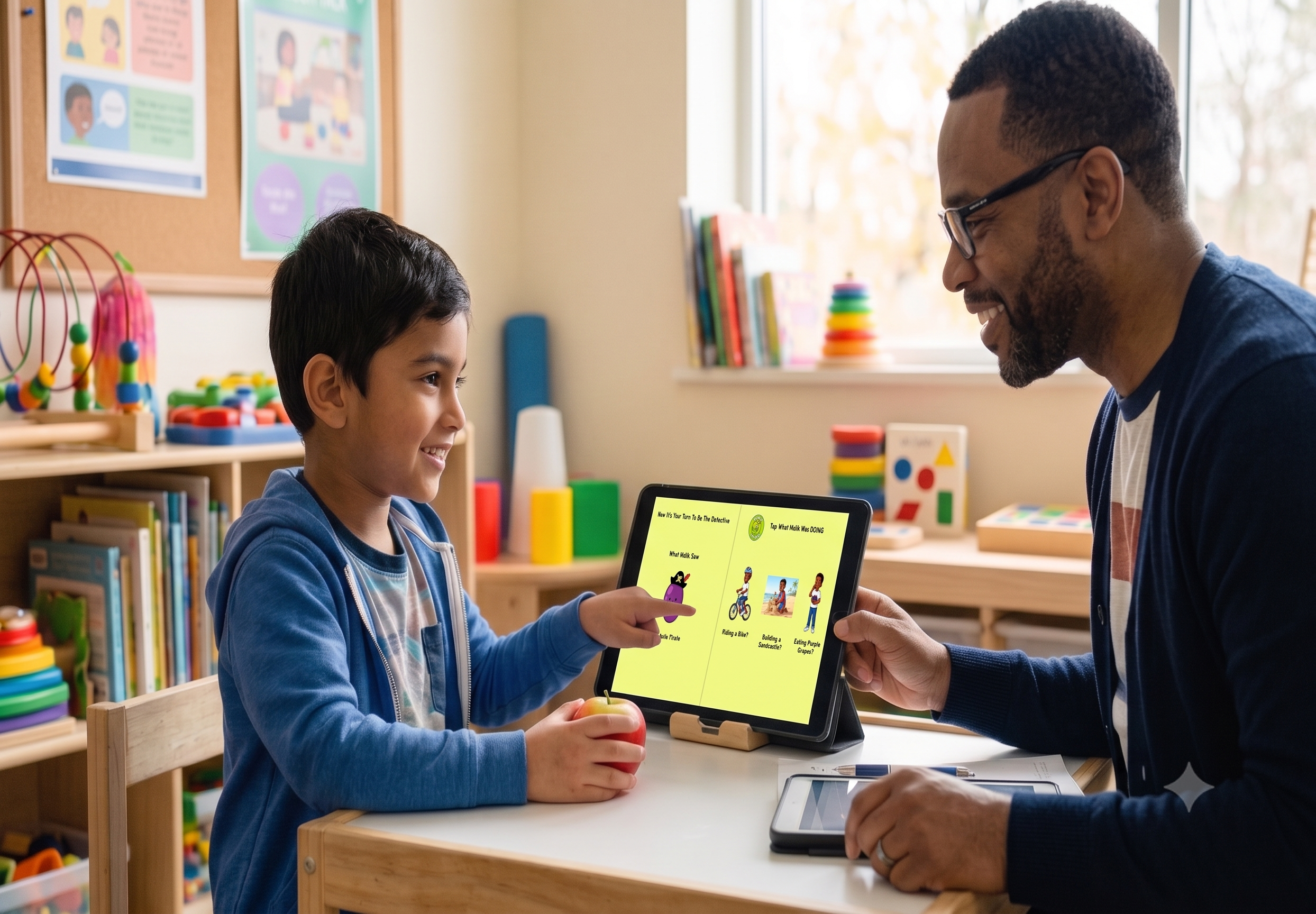
Designed specifically for speech-language pathologists, counselors, therapists, and educators, this interactive mystery turns the abstract bottleneck of Cognitive Theory of Mind into an intuitive, playful discovery.
Foundational Skill Building: Targets the prerequisite mechanics of perspective-taking by connecting what someone is doing and what someone is thinking to why they hold diverse beliefs.
Modular Clinical Design: Built for session flexibility—run through a complete, self-contained story arc in a short session, or combine scenarios for a deeper exploration.
Scaffolded Practice Exercises: Features six standalone evaluation exercises at the back of the book, allowing practitioners to easily measure comprehension, reinforce visual context, and guide re-framing without disrupting the story's narrative flow.
An essential, modular tool for any clinical or educational toolkit.
Why Practitioners and Educators Love It…